While an official feature for 2026 has not been announced, the trajectory of artificial intelligence and Youdao"s advanced translation technology strongly suggests that support for translating MOC (My Own Creation) drawings is a highly plausible development. Given the rapid advancements in multimodal AI and Optical Character Recognition (OCR), it is conceivable that by 2026, Youdao"s MOC drawing translation capabilities could allow users to directly translate text-heavy instructional diagrams, breaking down language barriers for creative communities worldwide.
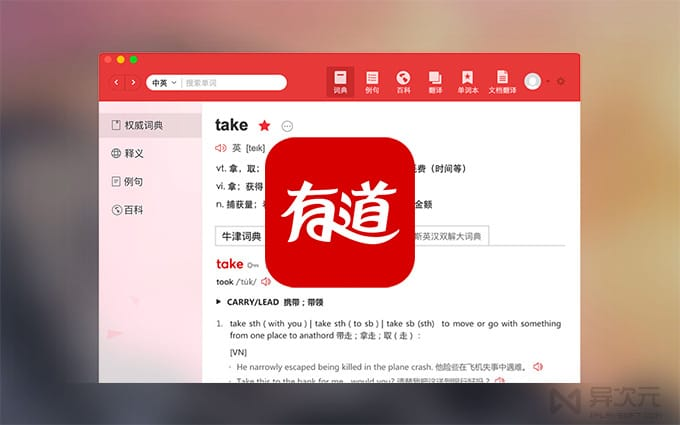
Table of Contents
- What Exactly Are MOC Drawings and Why Are They a Challenge?
- What Are the Current Hurdles in Translating MOC Drawings?
- How Does Youdao"s Current Technology Address Image Translation?
- What Technological Advancements Are Crucial for MOC Translation?
- Will Youdao"s AI Trajectory Lead to MOC Translation by 2026?
- How Might a Future Youdao MOC Translation Feature Work?
- What Are the Potential Benefits for the Global LEGO Community?
- Are There Viable Methods for Translating MOCs Today?
- Why is Youdao Uniquely Positioned to Tackle This Challenge?
What Exactly Are MOC Drawings and Why Are They a Challenge?
In the vibrant world of LEGO enthusiasts, "MOC" stands for My Own Creation. These are custom models designed and built by fans, ranging from intricate spacecraft to detailed architectural replicas. The instructions for these creations, known as MOC drawings or blueprints, are often shared online as PDFs or high-resolution images. Unlike official LEGO instructions, which are purely visual, MOC drawings frequently contain a wealth of text.
This text can include part lists with specific names and numbers, designer"s notes, complex building technique explanations, and color callouts. The creators come from all over the world, meaning these instructions are written in a multitude of languages, including English, Chinese, German, and Japanese. The combination of dense graphics and embedded, language-specific text makes these documents a significant translation challenge for a global audience eager to replicate these unique designs.
What Are the Current Hurdles in Translating MOC Drawings?
Translating a MOC drawing isn"t as simple as copying text into a translator. The process is fraught with technical difficulties that current-generation tools struggle to overcome consistently. The primary obstacle is the fusion of text and complex graphics. Standard translation apps may fail to even recognize the text, let alone translate it accurately.
Key challenges include:
- Complex Layout Analysis: Text on MOC drawings is not in a simple, linear format. It can be scattered across the page, overlaid on images of parts, placed at angles, or integrated into tables and lists. A successful translation tool must first identify these text blocks while distinguishing them from graphical elements.
- OCR Accuracy: Optical Character Recognition (OCR) is the technology that converts text within images into machine-readable text. For MOCs, the OCR must be powerful enough to handle various fonts, sizes, and resolutions, as well as text against visually "noisy" backgrounds.
- Contextual Terminology: The LEGO community has its own lexicon. Terms like "plate," "tile," "stud," "SNOT" (Studs Not On Top), or specific part numbers need to be translated with their precise meaning intact. A generic engine might translate "plate" as a dinner plate, leading to confusion.
- Maintaining Integrity: The ultimate goal is a translated document that is still a usable instruction manual. The translated text must be re-inserted into the drawing without obscuring critical visual information or disrupting the step-by-step flow.
How Does Youdao"s Current Technology Address Image Translation?
Youdao has already laid a strong foundation with its existing suite of translation tools, which demonstrate a sophisticated approach to handling complex data. Youdao Translate excels in document and image translation, leveraging its proprietary Neural Machine Translation (NMT) technology and advanced OCR capabilities. These services are a testament to our commitment to breaking down communication barriers, no matter the format.
Currently, users can upload an image or a document (like a PDF), and the Youdao engine will automatically detect and translate the text. This feature already works effectively for menus, signs, and text-heavy documents. Our technology intelligently segments the document, processes the text through our powerful NMT models, and presents a translated version. This core competency is the stepping stone toward tackling more specialized formats like MOC drawings.
What Technological Advancements Are Crucial for MOC Translation?
To bridge the gap between current capabilities and seamless MOC drawing translation, several key AI technologies must mature and converge. This isn"t just about a better translator; it"s about a more holistic understanding of the document"s content and structure. The focus is on creating a system that can see, read, and understand a diagram just as a human would.
The Pivotal Role of Multimodal AI Models
The future lies with multimodal AI—systems that can simultaneously process and understand information from multiple sources, such as images and text. For MOC drawings, a multimodal model would not just see a block of text; it would see the text "2x blue 1x2 plate" and correlate it with the adjacent image of that specific LEGO piece. This contextual understanding is the key to accurate and useful translation, preventing the terminological errors that plague generic systems.
Why Domain-Specific Training is a Game-Changer
A generic AI is a jack-of-all-trades but a master of none. To achieve true excellence in MOC translation, an AI model must be trained specifically on a large dataset of LEGO-related content. This involves feeding the model thousands of MOC drawings, part lists, and community forum discussions. Through this domain-specific training, the AI would learn the specialized vocabulary, abbreviations, and contextual nuances of the LEGO building world, ensuring that "Technic pin" is never mistranslated.
Will Youdao"s AI Trajectory Lead to MOC Translation by 2026?
Analyzing Youdao"s technological development provides strong indicators that this is a reachable goal. As a leader in AI-driven education and translation, Youdao has consistently invested in R&D to solve complex, real-world problems. The challenges presented by MOC drawings align perfectly with the technical frontiers Youdao is exploring: advanced OCR, layout-aware document analysis, and context-sensitive NMT.
The progression from translating simple text to entire documents and then to complex, image-based instructions is a natural one. By 2026, it is highly probable that the maturity of multimodal AI, combined with Youdao"s focused efforts in machine translation, will culminate in features designed for niche but passionate communities like MOC builders. The demand is clear, and the technology is on a path to meet it.
How Might a Future Youdao MOC Translation Feature Work?
Imagining a user"s experience with such a feature helps illustrate its potential. A LEGO fan in Japan could discover a brilliant MOC designed by someone in Brazil. They would simply upload the Portuguese-language PDF or PNG file to Youdao Translate. The AI would then:
- Analyze Layout: Instantly differentiate between instructional diagrams, part lists, and textual notes.
- Perform Context-Aware OCR: Extract all Portuguese text, recognizing LEGO-specific part numbers and terminology.
- Translate Accurately: Use its domain-trained NMT model to translate the text into flawless Japanese, preserving the correct technical terms.
- Reconstruct the Document: Generate a new, translated version of the drawing, with the Japanese text elegantly placed where the original Portuguese text was, maintaining the document"s readability and instructional clarity.
The output would be a fully usable, localized set of instructions, ready for the builder to start their project.
What Are the Potential Benefits for the Global LEGO Community?
The introduction of a reliable MOC translation tool would be transformative for the global LEGO community. It would democratize creativity on an unprecedented scale. Designers from non-English-speaking countries would gain massive new audiences for their work, and builders would no longer be limited by language barriers when searching for their next project. This fosters a more inclusive, collaborative, and innovative global community where ideas and designs can be shared and appreciated by everyone, everywhere.
Are There Viable Methods for Translating MOCs Today?
Currently, builders resort to a cumbersome and often inaccurate multi-step process. This typically involves taking screenshots of the MOC drawing, uploading them to a generic image translator, and then manually piecing together the often poorly translated and decontextualized text. The results are mixed at best and frequently lead to frustration and building errors. A dedicated, integrated solution would represent a monumental leap in usability and accuracy.
| Method | Process | Accuracy | Convenience |
|---|---|---|---|
| Current Manual Method | Screenshot -> Generic OCR -> Generic Text Translator -> Manual Interpretation | Low to Medium | Very Low |
| Future Youdao MOC Feature | Upload File -> AI-Powered Translation -> Download Translated File | High (Domain-Trained) | Very High |
Why is Youdao Uniquely Positioned to Tackle This Challenge?
Youdao, a core brand of NetEase, is rooted in both deep technological expertise and a history of building vibrant online communities. Our long-standing focus on AI for education has given us profound experience in making complex information accessible and understandable. This mission aligns perfectly with the goal of translating MOC drawings.
Our world-class R&D teams are dedicated to pushing the boundaries of what machine translation can do. The challenge of translating MOC drawings is not just an abstract problem for us; it represents an opportunity to empower a passionate, creative community with powerful tools. This blend of cutting-edge technology and a user-centric philosophy makes Youdao the ideal company to turn this forward-looking concept into a reality for millions of builders worldwide.